


A Table for Two Masters: The Ponti-Fornasetti Dining Set at Phillips CLX Europe
The estimate of $120,000 to $180,000 is not a ceiling. It is a starting point for a conversation about scarcity.
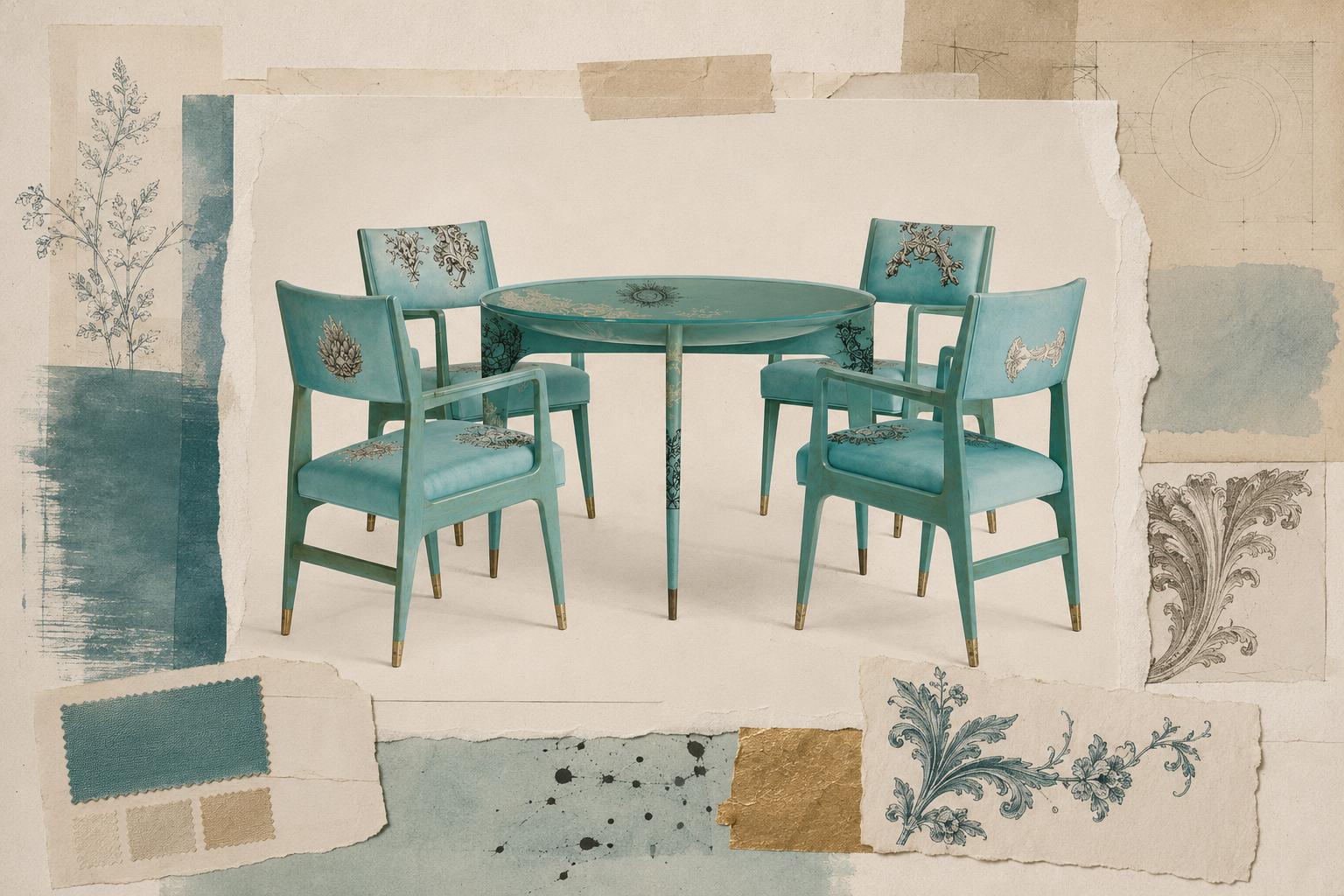
The conventional wisdom on Ponti-Fornasetti collecting runs something like this: buy the individual markets, avoid the collaborative work because it surfaces too rarely to price with confidence, and wait for the field to mature. It is a reasonable position. It is also, on the evidence of Lot 6 in the current Phillips CLX Europe sale, the wrong one.
The lot in question is a dining table and set of armchairs, jointly designed, jointly attributed, and carrying the kind of documented provenance that separates a serious acquisition from an educated guess. The estimate sits at $120,000 to $180,000. For a collector who already understands what authenticated collaboration between these two designers means in practice, that range functions less as a guide to fair value than as a signal of where the floor currently lies.
The reluctance to engage seriously with Ponti-Fornasetti collaborative pieces stems from their infrequency, and infrequency is being misread as a liquidity problem when it is actually a scarcity premium. The two designers each sustain strong independent markets. When their work converges in a single, functional, museum-quality object, the demand pools do not simply add together; they compete for the same lot. Institutional collectors, private collectors with Italy-rooted holdings, and design museums all have reason to want a piece that documents the collaboration in material form rather than in correspondence or retrospective catalogue essays.
A dining set is not incidental to this argument. It is central. Functional pieces carry both designers' hands in equal and legible measure: the structural logic belongs to one, the surface world to the other, and neither subordinates the other. That balance is harder to find than it sounds, and it is part of what the estimate reflects.
Candour requires naming what this acquisition is not. It is not liquid. There is no secondary dealer network that will absorb the piece on a six-month timeline at a price that rewards the original buyer. The holding horizon here is long, ten years at a minimum and probably longer before the market provides a natural exit at the right price. Anyone entering this position expecting otherwise will be disappointed.
What the piece does offer is something the broader Italy-rooted tangibles category has demonstrated consistently: it holds. Authenticated design of this calibre, with strong institutional demand and a provenance trail that can withstand scrutiny, does not quietly erode in value between sale cycles. It waits. The collector who treats it as one component of a longer-term portfolio, alongside property, wine, or other Italian mid-century holdings, is working with the grain of the asset rather than against it.
The table will seat its owners well in the meantime. That is not the point, but it is not nothing either.


