A 9th-Century Borgo Near Umbertide, Complete with Church, Vineyards, and Truffle Grounds
Nineteen residential units, a Romanesque church, and thirty hectares of working land: the full account of one of Italy's most complete borgo listings.

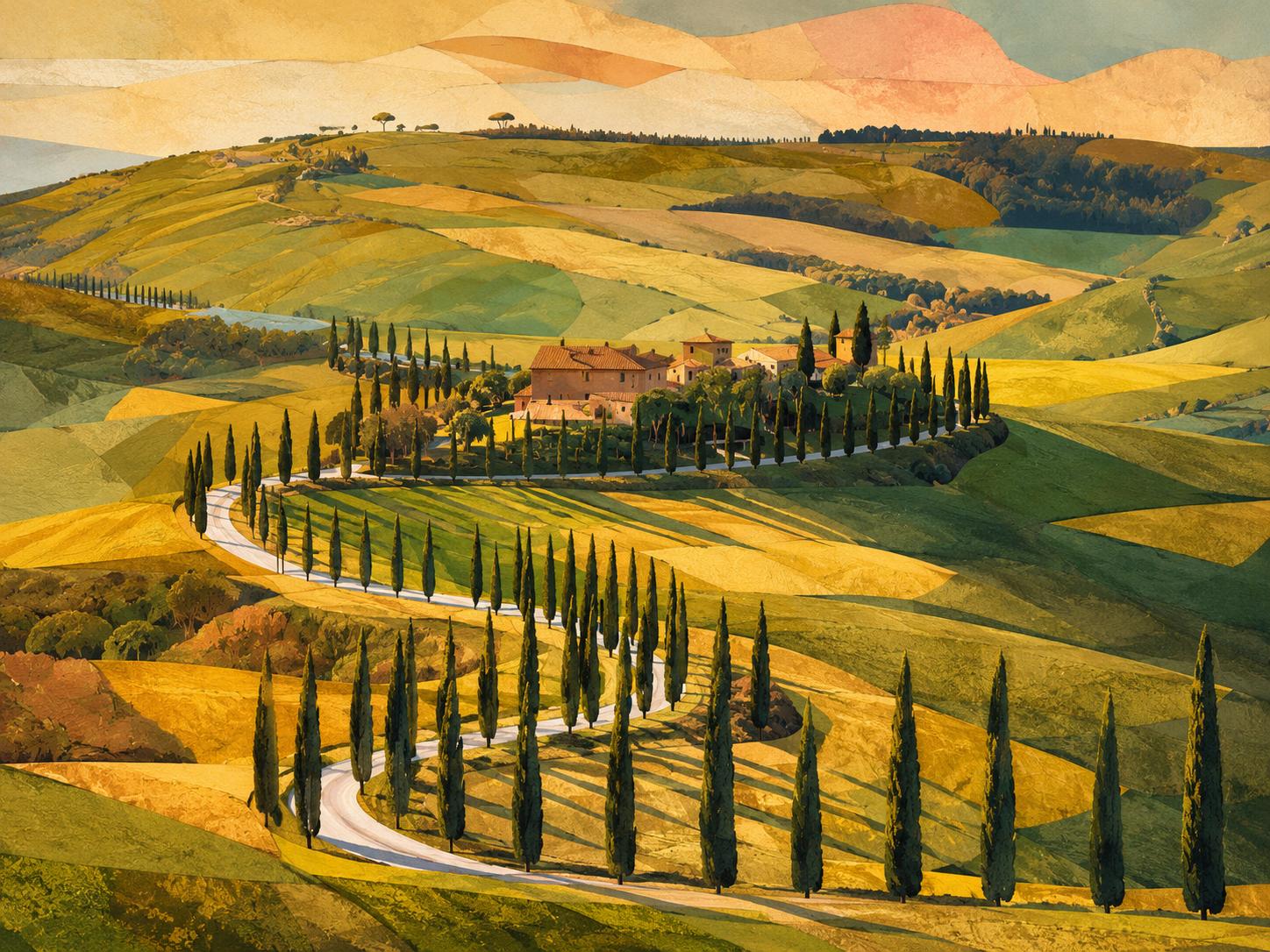
There is a particular quality to a settlement that has organised human life for twelve centuries. The borgo near Umbertide currently listed through Coldwell Banker Best Properties on JamesEdition is not a farmhouse that has been extended, nor a monastery adapted for residential use. It is a village. It has always been a village. The church at its centre was consecrated in 1126, and the settlement itself predates that by roughly three hundred years. What is on the market is the whole of it.
Seven hectares of built fabric sit within more than thirty hectares of surrounding woods and cultivated fields. The nineteen residential units range from seven fully finished apartments and houses, each with private pools and finished to a high residential standard, to twelve units that remain structurally present but unfinished. The common infrastructure includes an infinity pool, a tennis court, and two artificial lakes. The agricultural estate runs to 1,200 olive trees, three hectares of vineyards, and mapped truffle grounds.
The 1126 church is not a ruin and not a folly. It is part of the estate's fabric, and its presence is a material fact rather than an ornamental one. Intact Romanesque religious buildings of this age do not frequently appear in private transactions. When they do, they tend to anchor a valuation conversation in ways that comparable residential metrics cannot reach.
The investment case here is unusually clean for a holding of this complexity. Scarcity is the first pillar. Borghi of this completeness and documented continuity rarely surface on the open market; when they do, the pool of credible buyers is narrow, serious, and largely international. That illiquidity cuts both ways, and any buyer should price in a long horizon from the outset.
The second pillar is productive income. The olive trees, vineyards, and truffle grounds are not decorative. Properly managed or licensed to specialist operators, they generate recurring revenue that materially reduces net holding costs. This is agricultural land with established production, not land that needs to be converted to use.
The third pillar is development optionality. Twelve unfinished units give a buyer the ability to phase capital expenditure across several years and to configure the hospitality or residential programme to a specific brief. Agriturismo licensing is the natural vehicle for the hospitality component, and the estate's scale, its agricultural credentials, and its existing common infrastructure make it a strong candidate for that structure without significant repositioning.
For buyers considering relocation to manage the asset directly, Italy's flat-tax regime and the impatriate incentives remain available structuring tools, though the fiscal picture will depend on individual circumstances and should be modelled accordingly.
No asking price appears in the listing record available to us, and we do not speculate. What the record makes clear is the asset's liquidity profile: very low, long-horizon, appropriate for a buyer who is acquiring a piece of Italian patrimony rather than a position to be rotated. That is not a caveat to be managed. It is the nature of the thing. Twelve centuries of continuous settlement have a particular kind of staying power, and the right buyer will understand that the holding horizon is measured in generations, not in market cycles.
If you want to know more, contact us at info@italiainvested.com.