The Waterfront Wealth Shift: Why Italy's Coasts and Lakes Are the Ultimate Luxury Asset
A clear look at how electric vehicles are transforming transportation and sustainability.
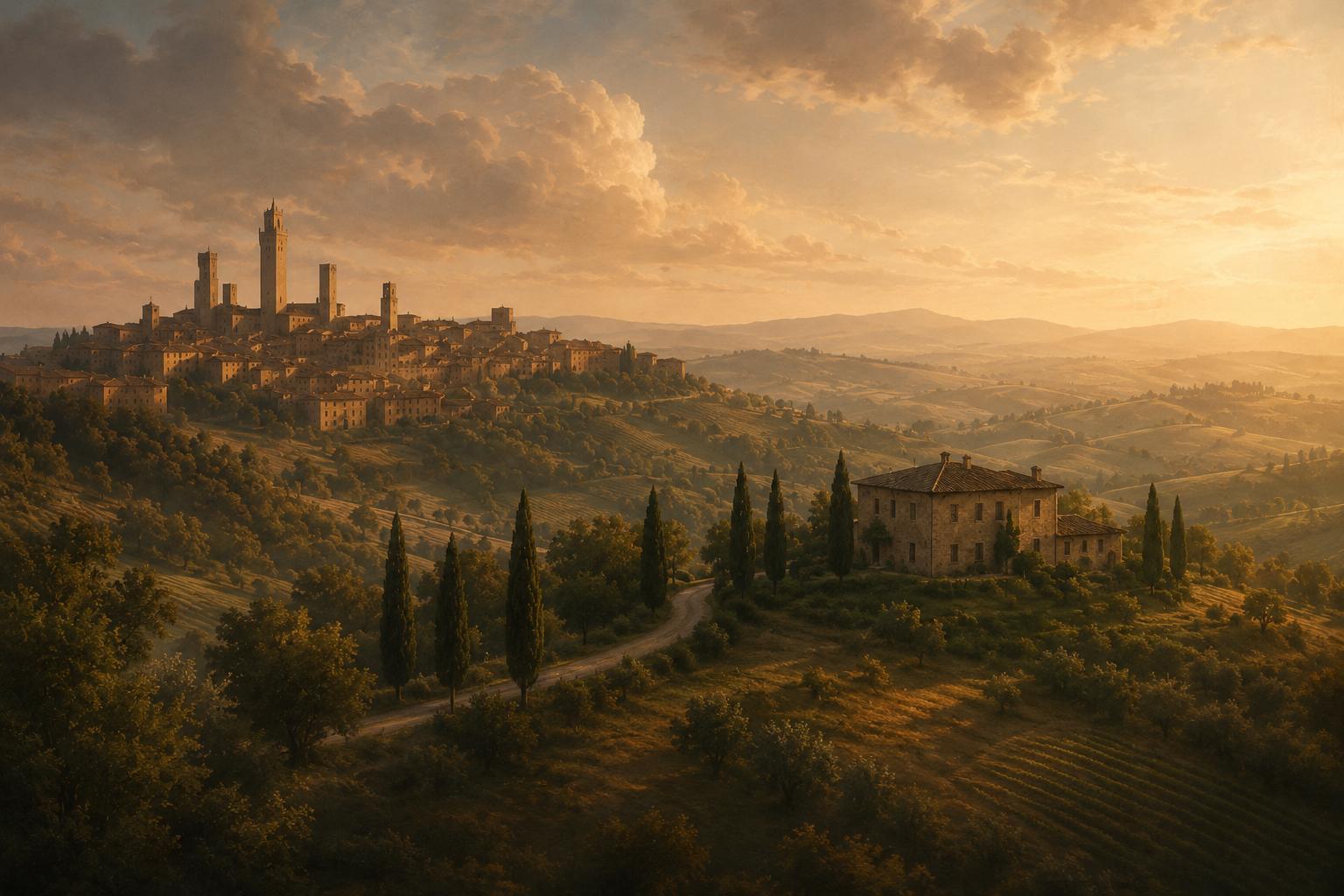
The conversation that keeps recurring in the offices of Italy's top property agencies goes something like this: a buyer arrives with a Tuscan farmhouse in mind — rolling hills, a cypress-lined drive, the whole Merchant Ivory fantasy — and leaves having committed to something on the water. It happens often enough that Engel & Völkers now treats it less as an anecdote and more as a data point.
The numbers bear it out. Of the top ten hotspots attracting international high-net-worth buyers to Italy today, six offer direct coastal or lakeside access. Lombardy and Tuscany together command nearly 60 percent of US buyer interest, but within that pairing the momentum has shifted: it is the lakes driving Lombardy, not Milan's hinterland. Tuscany's rolling interior is not in retreat, exactly, but it is increasingly sharing the stage with something older and harder to replicate. The thesis here is straightforward: waterfront property in Italy — the northern lakes, the Ligurian Riviera, the Sardinian coast — has become the defining store of value in the country's luxury residential market, and the structural conditions that made it so are not going away.
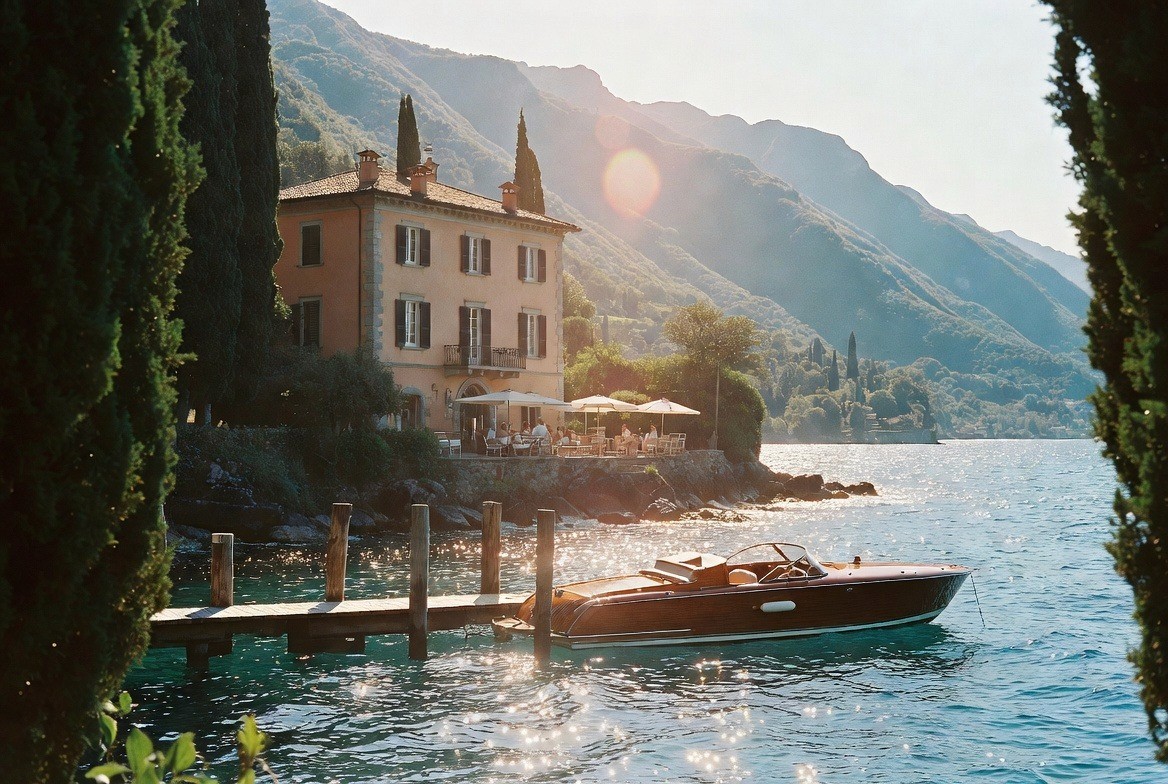
Ask a developer why they are not building more villas on Lake Como and the answer is almost insultingly simple: there is nowhere left to build them. The combination of strict historical zoning, protected shorelines, and centuries of accumulated ownership means that legitimate lakefront parcels are, for practical purposes, finite. Knight Frank's analysis of the Italian prime market identifies this supply constraint explicitly as a structural hedge — one that protects and inflates the capital value of existing assets regardless of what is happening to interest rates or credit conditions.
That last point matters more than it might first appear. Italy's luxury residential sector has demonstrated a notable independence from the rate cycle that has weighed on mainstream property markets across Europe since 2022. Because high-net-worth buyers and foreign investors acquire trophy assets predominantly without bank financing, the transmission mechanism that connects central bank policy to house prices simply does not apply in the same way. Engel & Völkers' 2025 market report is direct on this: the luxury segment's lower reliance on mortgage debt has made it structurally resilient to interest rate fluctuations in a way that mid-market property is not.
The result, at Lake Como, is a price trajectory that reflects pure demand meeting immovable supply. Premium refurbished homes in sought-after areas now range from €4,000 to €10,000 per square metre. Ultra-prime waterfront estates — the Belle Époque villas with their own jetties and formal gardens — reach €15,000 per square metre. Como captures 14.8 percent of all US buyer interest in Italian property, a remarkable concentration for a single micro-market. Knight Frank places it alongside Florence as one of the two locations recording the largest capital price growth in the country, measured against pre-pandemic benchmarks. The gap between Como and everywhere else is not closing.
A sophisticated buyer watching Como's price curve has two rational responses. The first is to accept the premium and acquire there anyway, treating the scarcity premium as a feature rather than a cost. The second is to look laterally, at the markets that are following Como's trajectory with a lag.
Lake Maggiore is the clearest example of the second strategy. Top-end prices there have reached €8,500 per square metre, and the buyers arriving are, by several agency accounts, doing so precisely because they have been priced out of Como or find its market too saturated to identify genuine value. What they find at Maggiore is a lake of comparable beauty — Stresa's Liberty-era hotels, the Borromean Islands sitting in the middle distance — with a price point that still offers room to appreciate. The historic residences that define Maggiore's character are the same kind of supply-constrained, non-replicable assets that drove Como's growth; they are simply earlier in the cycle.
Lake Garda, Italy's largest lake, occupies a different position: more accessible, more internationally known, more varied in quality. Prime areas such as Bardolino have seen values climb to between €7,000 and €10,000 per square metre, a range that reflects both the lake's scale and the meaningful difference between a first-row position and something set back from the water. Garda is a market where location within the micro-market matters considerably, and where the spread between the best and the merely good is widening.
The most dramatic growth story, however, is playing out on the other side of the country. Sardinia posted a 36 percent year-over-year increase in high-net-worth inquiries, making it the fastest-growing luxury market in Italy by that measure. The engine is Costa Smeralda — Porto Cervo and Porto Rotondo in particular — where the Aga Khan's original vision of a controlled, design-conscious resort community has created a template that has proved extraordinarily durable. The supply dynamics here mirror the lakes: the Costa Smeralda Consortium's architectural controls effectively prevent the kind of development that would dilute the asset base. What exists is, largely, what will exist.
On the Ligurian coast, the comparison with international peers becomes useful. Portofino and Santa Margherita Ligure are recording top values of up to €25,000 per square metre for sea-view properties — a figure that places them in the same conversation as Cap Ferrat or Positano, and that reflects the near-total absence of developable land in a coastline defined by vertical topography and protected historic centres. The counterargument sometimes raised about Liguria — that its market is thinner and less liquid than Como or Sardinia — is not without merit. For a buyer whose horizon is a decade or more, thinness of market is a different proposition than it is for someone who might need to exit quickly.
The one characteristic that unites every market discussed here is the one that makes some investors hesitate: these assets are not easy to sell quickly. A waterfront estate on Como or a Costa Smeralda villa is not a position you can exit in a month. The pool of buyers is, by definition, small — wealthy, international, and deliberate. Transaction timelines are long. Due diligence on historic properties is complex.
And yet this illiquidity is, in a meaningful sense, part of the value proposition. The same scarcity that makes these assets difficult to exit is what prevents the oversupply that erodes value in other segments. The buyer who understands this — who is acquiring a home that will also function as a long-term store of capital, with no expectation of a liquid market — is engaging with these properties on the correct terms. Knight Frank's data showing prime Italian waterfront prices sitting well above pre-pandemic levels is not, in this light, a reason for caution. It is evidence that the thesis has already been tested and held.
The Tuscan farmhouse is not going anywhere. It remains one of the most recognisable luxury assets in European property, and the buyers who want it will continue to find it. But the capital conversation in Italian real estate has moved to the water — to the northern lakes, the Sardinian coast, the Ligurian cliff-face villages — and the structural reasons for that shift are the kind that tend to persist rather than reverse.
The view from the jetty, it turns out, is not just beautiful. It is scarce. And in the long arithmetic of asset value, those two things have a way of meaning the same thing.